
When it comes to weight conversions, .7 lbs might not sound like much, but don’t underestimate its power. That seemingly tiny number can throw a wrench in your cooking plans or gym routine if you’re not careful. Imagine trying to whip up a recipe only to realize you’ve got the wrong weight—talk about a recipe for disaster!
Understanding Weight Conversions
Weight conversions play a critical role in various settings, particularly in cooking and fitness. Accurate measurements promote success in preparing meals or achieving workout goals. One example involves converting .7 lbs to oz. This conversion impacts portion sizes and overall meal planning.
Weight is often expressed in pounds and ounces. Knowing the equivalent of .7 lbs in ounces simplifies these tasks. Specifically, 1 pound is equal to 16 ounces. Therefore, multiplying .7 by 16 yields 11.2 ounces. This conversion becomes essential when adjusting recipes or tracking food intake.
Many individuals face challenges with weight measurements, especially when switching between metric and imperial systems. Familiarity with basic conversions enhances confidence in managing food and exercise routines. Utilizing conversion charts or calculators further aids in accurate measurements.
Experts recommend maintaining a digital or physical reference for common conversions. This practice minimizes potential errors and streamlines processes. Adopting a consistent approach to weight conversions supports effective meal prep and fitness planning.
Understanding weight conversions like .7 lbs to oz ensures clarity and accuracy in various scenarios. Familiarity with these conversions fulfills specific needs in cooking and fitness, leading to improved outcomes. Integrating these measures into daily routines can enhance overall efficiency and satisfaction.
The Importance of Accurate Measurements
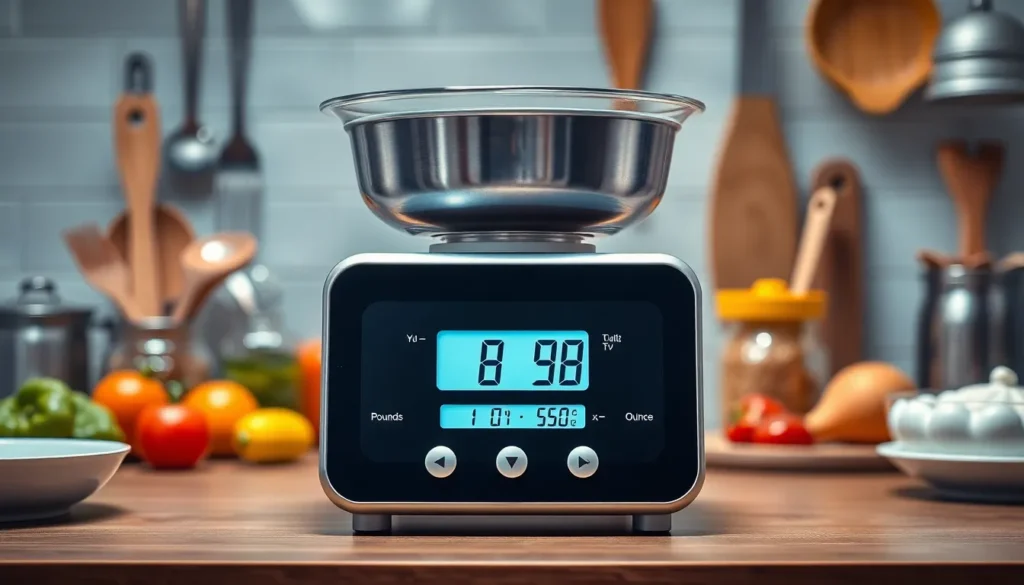
Accurate measurements play a crucial role in various aspects of daily life, particularly in cooking and fitness. Precision ensures optimal results, preventing mishaps and inefficiencies.
Common Weight Units
Common weight units include pounds and ounces, with the pound (lb) used predominantly in the United States. An ounce (oz) serves as a smaller unit, essential for precise measurements in recipes. Understanding both units aids in portion control, especially during meal preparation. Often, cooking requires converting larger weight measurements to smaller ones for accuracy. Familiarity with these units simplifies the cooking process and enhances the overall culinary experience.
Reasons for Converting Pounds to Ounces
Converting pounds to ounces helps achieve accurate portion sizes, vital in cooking and dieting. A single pound equals 16 ounces, which means that .7 lbs translates to 11.2 ounces. Precision in measurements influences calorie tracking for fitness goals, allowing individuals to maintain better control over their intake. In baking, weight accuracy can impact the outcome of recipes, making conversions critical. Keeping conversions readily available minimizes errors and streamlines meal prep. Understanding these conversions fosters confidence in both culinary and fitness endeavors.
How to Convert .7 lbs to oz
Converting .7 lbs to ounces is straightforward when following a simple process. Start by knowing that 1 pound equals 16 ounces. Multiply the number of pounds by 16 to find the equivalent in ounces. In this case, .7 times 16 equals 11.2. Accurate calculations ensure effective meal preparation and fitness tracking.
Step-by-Step Conversion Process
- Determine the number of pounds: .7 lbs.
- Multiply by the conversion factor: 16 oz per lb.
- Perform the calculation: 0.7 multiplied by 16 equals 11.2 oz.
- Note the result: .7 lbs converts to 11.2 oz.
This method applies to any weight conversion from pounds to ounces. Familiarity with the process enhances confidence in precise measurements.
Example Conversions
To provide clarity, explore similar examples. Converting 1 lb results in 16 oz. A half pound, or .5 lb, produces 8 oz. For a quarter pound, .25 lb equals 4 oz. These examples illustrate how converting weights can simplify recipe adjustments and portion control. Keeping track of these conversions aids in cooking and dieting, fostering optimal results.
Practical Applications of .7 lbs to oz
Understanding the conversion of .7 lbs to ounces holds practical significance in various daily activities.
Cooking and Baking
In cooking and baking, accurate measurements directly impact the quality of dishes. A recipe that calls for specific weights can yield different results if the measurements are off. For example, .7 lbs translates to 11.2 oz, which can define the texture and flavor of ingredients like flour or sugar. Chefs often utilize precise weight measurements to ensure consistency in their culinary creations. Following the correct conversion helps in adjusting recipes, especially when scaling up or down for different servings. Many bakers find using weights more reliable than volume measurements, making familiarization with weight conversions essential in their practice.
Shipping and Packaging
Shipping and packaging processes also depend on accurate weight measurements. Businesses use weight conversions to determine shipping costs and packaging requirements. For instance, knowing that .7 lbs equals 11.2 oz can assist in selecting appropriate packaging materials to minimize excess weight and reduce costs. Additionally, carriers may set pricing tiers based on weight, making the accuracy of these measurements crucial to budget and logistics planning. Accurate weight assessments contribute to efficient inventory management, helping avoid overcharges or delays in fulfillment. Companies streamline their operations, leading to better customer satisfaction when they implement precise weight conversions.
Mastering weight conversions like .7 lbs to ounces can significantly enhance daily routines. Whether in the kitchen or during workouts, precision in measurements ensures optimal results and satisfaction.
By understanding how to convert .7 lbs to 11.2 ounces individuals can improve their cooking accuracy and fitness tracking. This knowledge not only streamlines meal prep but also aids in portion control, making it easier to achieve dietary goals.
Familiarity with these conversions fosters confidence in managing both food and exercise, ultimately leading to better outcomes. Embracing accurate weight measurements is a simple yet effective way to elevate everyday experiences.


